Why Are Alaska’s Rivers Turning Orange?

It was a cloudy July afternoon in Alaska’s Kobuk Valley National Park, part of the biggest stretch of protected wilderness in the U.S. We were 95 kilometers (60 miles) from the nearest village and 400 kilometers from the road system. Nature doesn’t get any more unspoiled. But the stream flowing past our feet looked polluted. The streambed was orange, as if the rocks had been stained with carrot juice. The surface glistened with a gasolinelike rainbow sheen. “This is bad stuff,” said Patrick Sullivan, an ecologist at the University of Alaska Anchorage.

Sullivan, a short, bearded man with a Glock pistol strapped to his chest for protection against Grizzly Bears, was looking at the screen of a sensor he had dipped into the water. He read measurements from the screen to Roman Dial, a biology and mathematics professor at Alaska Pacific University. Dissolved oxygen was extremely low, and the pH was 6.4, about 100 times more acidic than the somewhat alkaline river into which the stream was flowing. The electrical conductivity, an indicator of dissolved metals or minerals, was closer to that of industrial wastewater than the average mountain stream. “Don’t drink this water,” Sullivan said.

Read on at Scientific American

Engineers are building the first bridge over a moving rock glacier

A grizzly bear explodes out of the shadowy brush in front of me and bounds up the mountainside, pausing to look back for one soul-shaking moment before continuing over the sunlit ridge with her two cubs.

Polychrome Pass in Denali National Park, Alaska, is full of such sublime sights. Streams the colour of pencil lead crash down from rapidly disappearing glaciers into the green tundra. Golden eagles glide over vast mountains of pink, brown and yellow volcanic rock. Far to the west, clouds swirl around the 6200-metre summit of Denali, North America’s highest peak.

Visitors used to take in these sights via a gravel road cut into the steep slope 120 metres above the valley floor, a route so dizzying that some would leave the bus and walk. Then in 2014, a section of the road the length of a football pitch started collapsing down the mountainside.

“It was dropping several feet a year,” says Brad Ebel, a former maintenance crew leader. “It was obvious that it was speeding up.”

Read on at New Scientist

Slow-motion wrecks: how thawing permafrost is destroying Arctic cities

5184-2

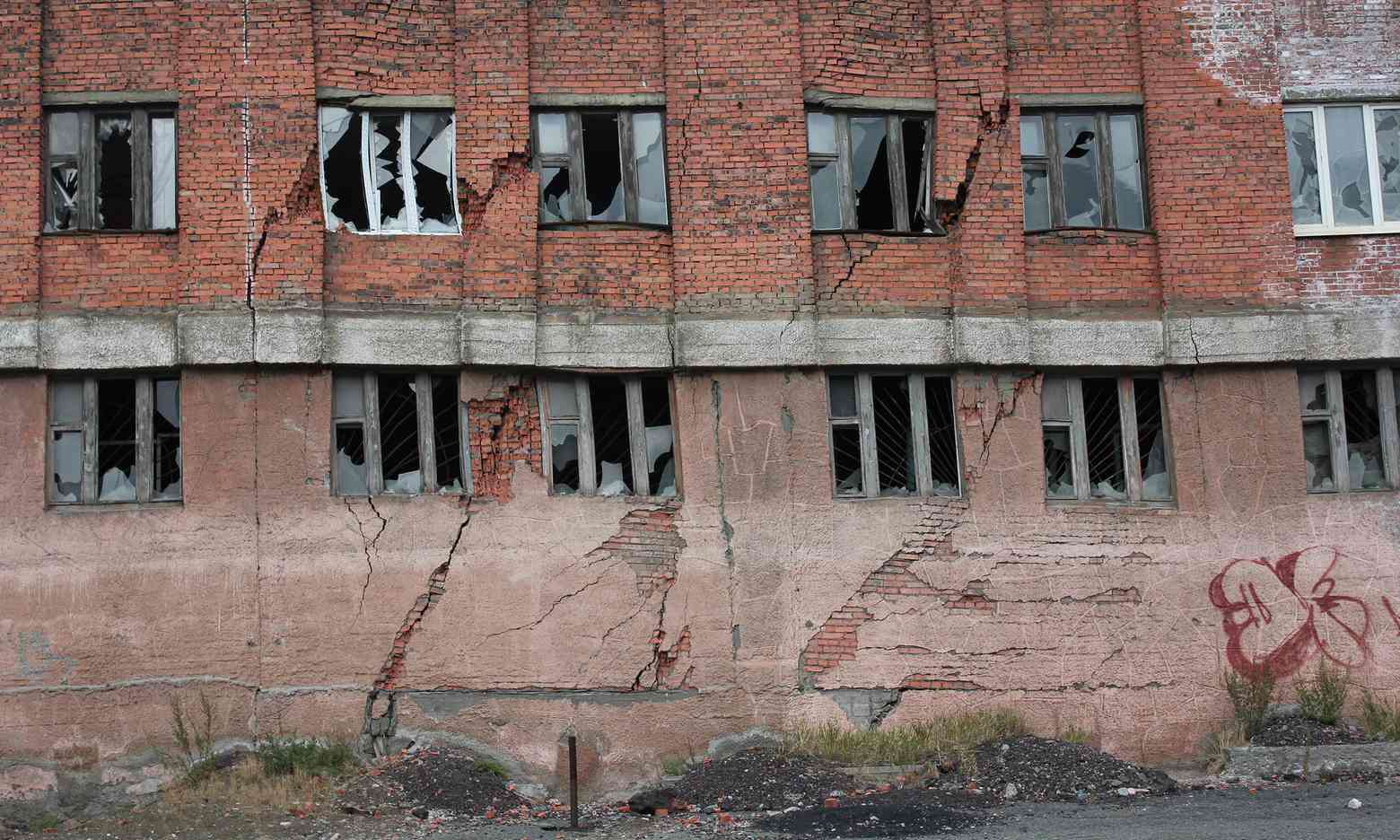
At first, Yury Scherbakov thought the cracks appearing in a wall he had installed in his two-room flat were caused by shoddy workmanship. But then other walls started cracking, and then the floor started to incline. “We sat on the couch and could feel it tilt,” says his wife, Nadezhda, as they carry furniture out of the flat.

Yury wasn’t a poor craftsman, and Nadezhda wasn’t crazy: one corner of their five-storey building at 59 Talnakhskaya Street in the northern Russian city of Norilsk was sinking as the permafrost underneath it thawed and the foundation slowly disintegrated. In March 2015, local authorities posted notices in the stairwells that the building was condemned.

Cracking and collapsing structures are a growing problem in cities like Norilsk – a nickel-producing centre of 177,000 people located 180 miles above the Arctic Circle – as climate change thaws the perennially frozen soil and increases precipitation. Valery Tereshkov, deputy head of the emergencies ministry in the Krasnoyarsk region, wrote in an article this year that almost 60% of all buildings in Norilsk have been deformed as a result of climate change shrinking the permafrost zone. Local engineers said more than 100 residential buildings, or one-tenth of the housing fund, have been vacated here due to damage from thawing permafrost.

Read on at the Guardian