Russia’s ‘slow-motion Chernobyl’ at sea

By tradition, Russians always bring an odd number of flowers to a living person and an even number to a grave or memorial. But every other day, 83-year-old Raisa Lappa places three roses or gladiolas by the plaque to her son Sergei in their hometown Rubtsovsk, as if he hadn’t gone down with his submarine during an ill-fated towing operation in the Arctic Ocean in 2003.

“I have episodes where I’m not normal, I go crazy, and it seems that he’s alive, so I bring an odd number,” she says. “They should raise the boat, so we mothers could put our sons’ remains in the ground, and I could maybe have a little more peace.”

After 17 years of unfulfilled promises, she may finally get her wish, though not out of any concern for the bones of Captain Sergei Lappa and six of his crew. With a draft decree published in March, President Vladimir Putin set in motion an initiative to lift two Soviet nuclear submarines and four reactor compartments from the silty bottom, reducing the amount of radioactive material in the Arctic Ocean by 90%. First on the list is Lappa’s K-159.

The message, which comes before Russia’s turn to chair the Arctic Council next year, seems to be that the country is not only the preeminent commercial and military power in the warming Arctic, but also a steward of the environment. The K-159 lies just outside of Murmansk in the Barents Sea, the richest cod fishery in the world and also an important habitat of haddock, red king crab, walruses, whales, polar bears and many other animals.

Read on at BBC Future Planet

World’s largest reindeer herd targeted by poachers for antler velvet

MOSCOW – The scene was pure carnage. Dozens of reindeer carcasses were sprawled on the sandy shore of the Khatanga River or floating in the current toward the Arctic Ocean, as if the animals had drowned in mid-stream. The story of what actually befell these reindeer on the Taymyr Peninsula, in Russia’s Krasnoyarsk region, however, was far more grisly.

In a video filmed by hunters in 2017 and shared on a Russian public interest YouTube channel, two men can be seen bending over the side of an aluminum boat. Soon after, a reindeer with a knobby head frantically swims away from them. Later, one of the men, smoking a cigarette, reaches into the bow and pulls out a saw—and two fuzzy brown antlers. At the time, according to Russian state media, the antlers would have been worth several hundred dollars—the better part of an average monthly wage in Taymyr.

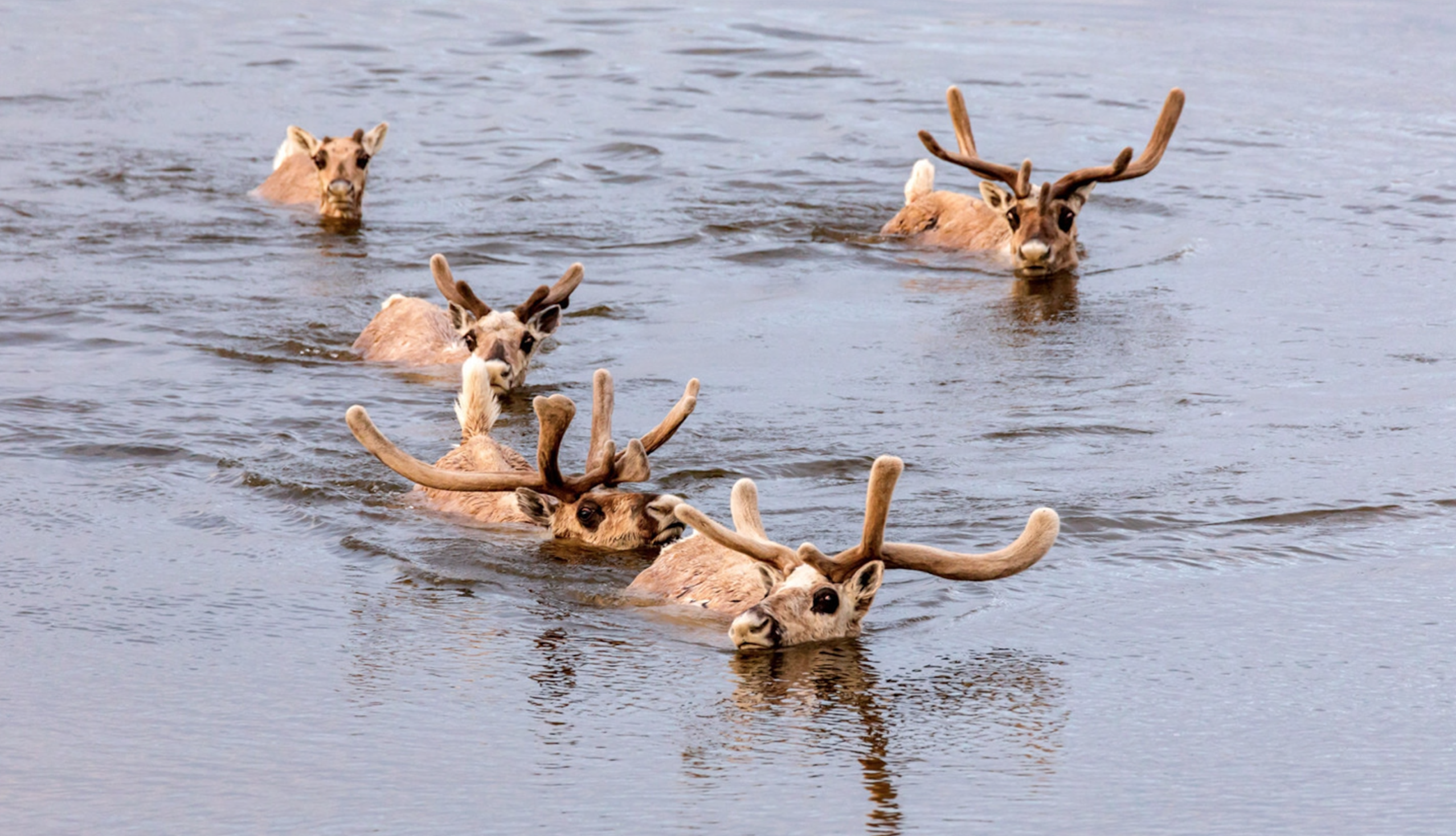
The crowds of reindeer swimming across rivers at the few fordable crossing points during their spring migration, heads barely above water, can do little to avoid poachers ambushing them in boats. The men grab their velvet antlers—“velvet” for the thick, downy skein of blood vessels feeding the new bone as it grows—and cut them off, leaving the animals with an open wound prone to fatal infection.

“I pity the animals that suffer this torture,” says Pavel Kochkaryov, director of the Central Siberian Nature Reserve, a protected area in Krasnoyarsk, who previously worked as a game warden in Taymyr and continues to study the reindeer herd there. He compares cutting off a reindeer’s sensitive young antlers to amputating a limb. “No one knows how quickly they will die once they swim to shore,” he says.

Read on at National Geographic

The Russian Conspiracy Theory That Won’t Die

Precisely 61 years ago, a band of skiers trekking through the Ural Mountains stashed food, extra skis, and a well-worn mandolin in a valley to pick up on the way back from their expedition. In a moment of lightheartedness, one drew up a fake newspaper with headlines about their trip: “According to the latest information, abominable snowmen live in the northern Urals.” Their excess equipment stored away, the group began moving toward the slope of Peak 1079, known among the region’s indigenous people as “Dead Mountain.” A photograph showed the lead skiers disappearing into sheets of whipping snow as the weather worsened.

Later that night, the nine experienced trekkers burst out of their tent half-dressed and fled to their deaths in a blizzard. Some of their corpses were found with broken bones; one was missing her tongue. For decades, few people beyond the group’s friends and family were aware of the event. It only became known to the wider public in 1990, when a retired official’s account ignited a curiosity that soon metastasized.

Today, the “Dyatlov Pass incident,” named after one of the students on the trek, Igor Dyatlov, has become Russia’s biggest unsolved mystery, a font of endless conspiracy theories. Aliens, government agents, “Arctic dwarves”—and yes, even abominable snowmen—have at various points been blamed for the deaths. One state-television show regularly puts self-appointed experts through a theatrical lie-detector test to check their outlandish explanations.

Read on at The Atlantic

Exclusive: First look inside Chernobyl control room where disaster began as it opens to tourists

At the door of the control room where the world’s worst nuclear disaster began, a Geiger counter showed radiation of 2.33 microsieverts an hour – well under the 100-microsievert total dose the Chernobyl power plant allows visitors.

Then long-serving plant employee Sergei Parikvash, who saw the reactor explode while fishing in the cooling pond on April 26, 1986, held the counter up to a protective lead plate on the hallway floor. The readings began going up: 5.6, 6.2, 6.4, 6.54 …

Tour groups have become an almost daily sight at the Chernobyl power plant following the hit HBO/Sky mini-series this spring. Now the plant will begin letting visitors into the reactor four control room, where much of the harrowing first episode is set, as part of a push to develop tourism.

The Telegraph was the first foreign media to visit this room since it was opened to the public, a few dozen feet away from the reactor that blew up due to a combination of design flaws and human error.

Stepping into the gloom of the control room, the group’s feet stuck slightly to the floor, which is treated with chemicals to keep down dust particles that could otherwise bring radioactive elements into visitors’ lungs.

A nuclear hazard sign indicated a hotspot on the wall, next to which the Geiger counter registered almost 25 microsieverts.

“Maybe your dosimeter isn’t properly calibrated?” guide Anton Povar asked. “It was 30 when I checked it last week.”

Continue reading

Floating nuclear power plant to be towed across Russian Arctic despite ‘Chernobyl on ice’ concerns

The wind and rain whipped by at several feet per second as crew members stepped outside for a quick smoke, but the world’s only floating nuclear power plant barely shifted in the choppy waves of the Kola bay.

The length of one-and-a-half football pitches, with its once rusty hull repainted in the white, red and blue of the national flag, the Academic Lomonosov looks the part as the vanguard of Russia’s “nuclearification” of the warming Arctic.

Later this month it will be towed 3,000 miles from the northwestern corner of Russia to the Chukotka region next to Alaska, where it will provide steam heat and eventually electricity to the coastal gold-mining town of Pevek, population 4,000.

The state corporation Rosatom is trumpeting the Academic Lomonosov as the next big step in nuclear energy and a possible solution to electricity needs in Africa and Asia. It’s part of a surge in nuclear vessels along what Russia hopes will be a major new Arctic trade route including icebreakers, warships and even an underwater drone.

“This is like launching the first rocket into space because it’s a pilot project, the first in the world,” Vladimir Irimenko, senior engineer for environmental protection, said before showing journalists the reactor control room.

Continue reading

Russia’s Arctic towns prepare for more polar bear ‘invasions’ as sea ice melts

Airport maintenance worker Ruslan Prikazchikov was coming to the end of a night shift last week when he glanced out the window and saw a polar bear walking down the taxiway, stopping every few feet to look around.

He wasn’t overly concerned. As a lifelong resident of Amderma, a hardscrabble former mining and military town perched on the edge of the Arctic Ocean 1,200 miles northeast of Moscow, Mr Prikazchikov has seen more than a hundred polar bears first-hand. He took a quick video on his phone, yelled out the window so the bear would keep moving and put the kettle on for tea.

“It’s par for the course,” he said. “They were always here. They are the masters here, so we don’t conflict with them, and they don’t show aggression toward us.”

The “tsar of the Arctic” has indeed always been part of life in Amderma. It features in the folktales of indigenous Nenets reindeer herders, and old photographs show Soviet soldiers feeding condensed milk to polar bears well within reach of their razor-sharp two-inch claws. Some residents even admitted to having poached the animals in the hungry 1990s, when a hide was said to fetch $10,000.

But as global warming melts the polar sea ice, these marine hunters are increasingly being forced onto land. The risk of conflict with the humans is rising, who are also arriving in greater numbers as Russia develops oil and gas deposits and expands its military capabilities in the Arctic.

Continue reading

In Siberia, climate change comes to the coldest village on earth

The Siberian village of Oymyakon is regarded as the coldest permanently-inhabited place on earth.

Though it is only a few degrees of latitude further north than Aberdeen, the village of 500 residents is in a mountain valley where cool air pools, isolated from warmer currents by the “Siberian high” pressure system and the Chersky range.

Yet even here, the effects of global warming are already being felt.

There are no walruses tumbling to their deaths like in David Attenborough’s new Our Planet series. (That was in the neighbouring Chukotka region.) But as the permafrost soil thaws in this region, thousands of people have had to move to new housing, forests are burning more often and animals face new predators and diseases.

When I arrived after a bumpy 26-hour journey on the gravel “road of bones” – which is built over the remains of gulag labourers – it was -22C in Oymyakon. Locals described this as “warm” as they took me for a bracing dip at a place where an underground stream prevents the river from freezing.

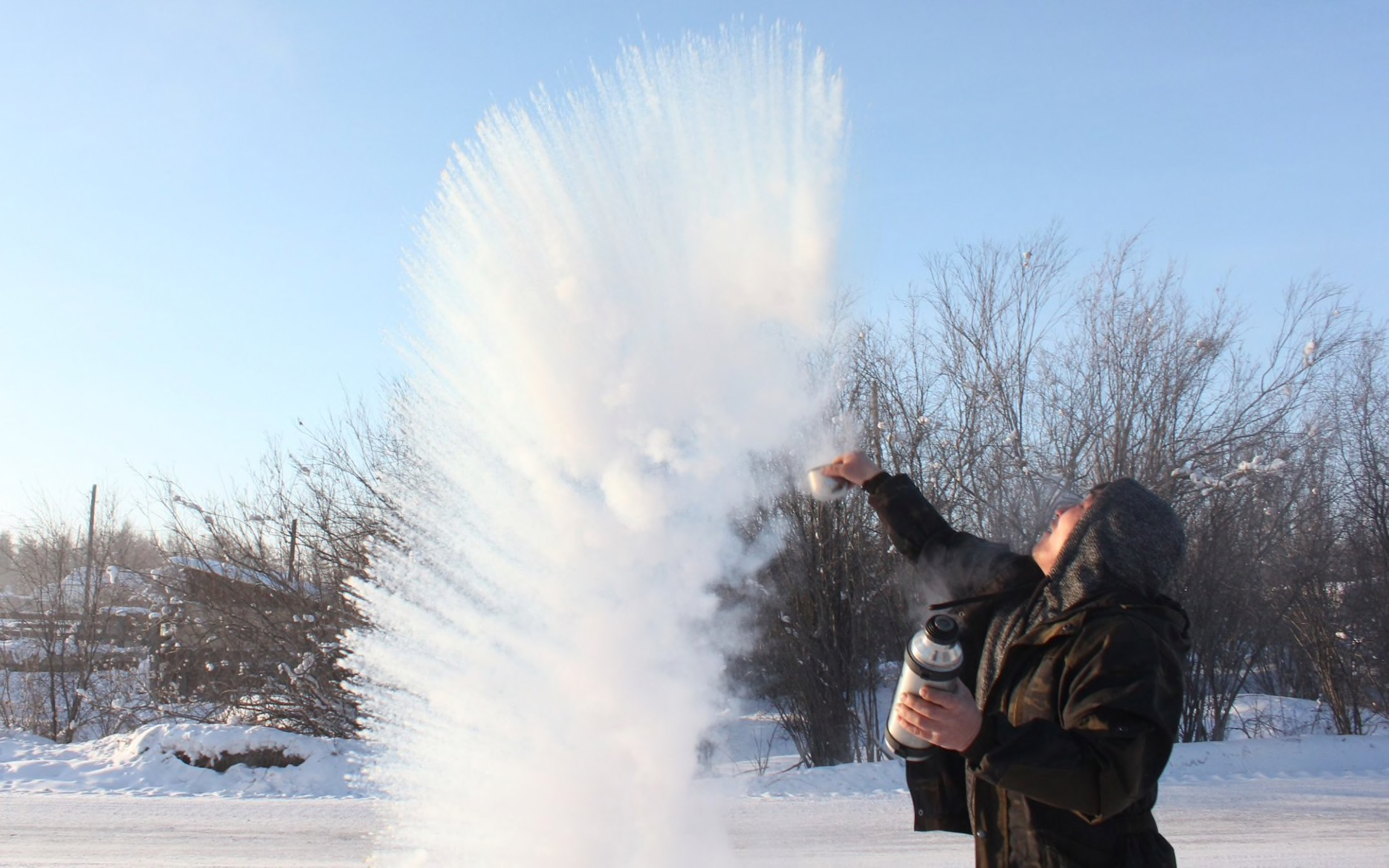
The next morning it was a more respectable -45C, cold enough to make a cup of hot water freeze instantly when we threw it into the air. Yet it was still far from the record of -68C recorded in the “Pole of Cold” in 1933.

Continue reading