Pro-Russia victors vow to ignore deal for ceasefire in Ukraine

74819ac9-c6d1-4e27-b8e2-1331ddf86eac-2060x1236

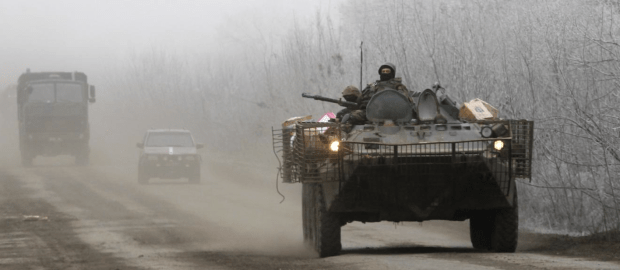
As the sun set over the cratered fields around Debaltseve, a group of pro-Russia Cossack fighters were retrieving boxes of anti-tank artillery rounds and two armoured vehicles left by Kiev’s forces on the side of the Rostov-Kharkiv highway, which was littered with mangled cars and turret-less tanks.

Shattered petrol stations and garages attested to weeks of intense fighting for the strategic town. Two troop transport trucks that had crashed into each other, scattering boots and clothing, spoke of the Ukrainian forces’ rushed, chaotic retreat this week.

“Donetsk and Luhansk regions are our home. We will take back our land,” said Andrei Dyomin as he tethered one broken-down fighting vehicle to a truck. “Every ceasefire they move up their armour and start killing us again. There won’t be a ceasefire, there will be war.”
Read on at the Guardian

Escape from Debaltseve: How One Convoy Made It Out of Ukraine’s Besieged City

Screen Shot 2016-03-29 at 11.09.13 PM.png

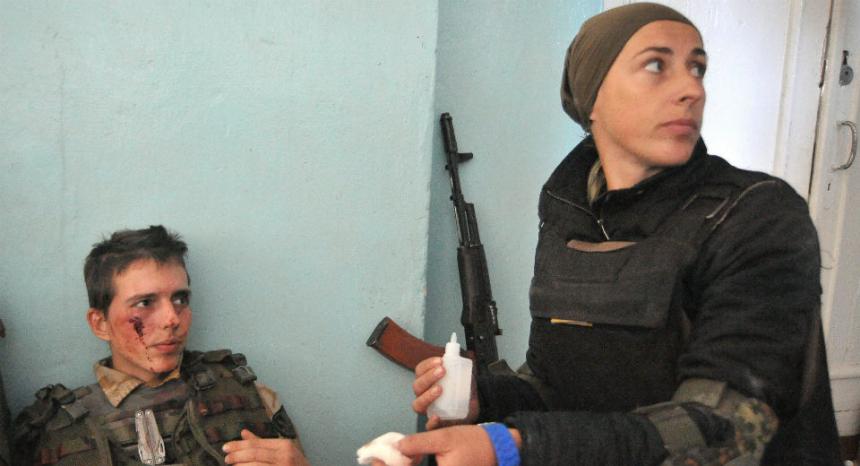
Seven trucks full of Ukrainian soldiers left the besieged town of Debaltseve in eastern Ukraine hours after the so-called ceasefire began Sunday. Only five made it back safely behind Ukrainian lines.

As they sped north through the no man’s land between Debaltseve and the next Ukrainian position, they began taking fire from rebel artillery. A squad commander who goes by the call sign Jackson was in the first truck.

“A shell landed three meters from our vehicle,” he told VICE News. “It’s a miracle we’re alive. The third truck got hit.”

Read on at VICE News

They were never there: Russia’s silence for families of troops killed in Ukraine

0b6f63a2-c447-49fc-aed7-eecbb767401d-620x372

Agrowing body of information about Russian soldiers killed in Ukraine has started to reveal a damning picture of Moscow’s intervention in the separatist conflict there, despite Kremlin denials of involvement.

As fighting continued to flare in the east particularly around Donetsk airport, an online organisation has catalogued more than 260 people reportedly killed in eastern Ukraine. The Open Russia organisation , started by the Kremlin critic Mikhail Khodorkovsky, has also published a map showing where the dead are from.

The official denial of Russian military participation in Ukraine has pressured the relatives of those who served and died there to keep silent, and could deprive many of them of the benefits to which they are entitled. But some have started to speak out.

Read on at the Guardian

The People’s Court of Eastern Ukraine

alexei_mozgovoi_ap_img

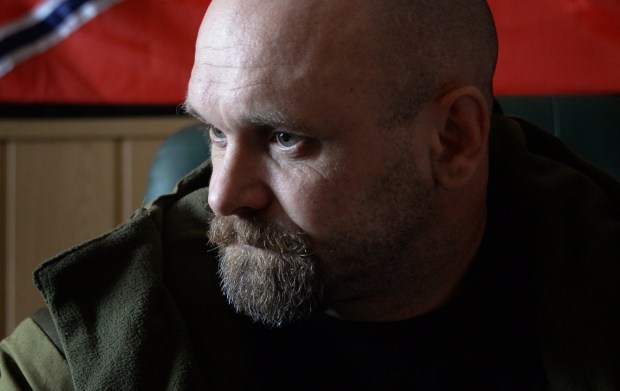
One afternoon in late October, Kalashnikov-armed pro-Russian separatists led two accused rapists into the House of Culture in Alchevsk in the self-declared Luhansk People’s Republic for a “people’s court,” twisting their arms behind their backs so they were forced to bend over as they walked. One read out the evidence gathered against the first man by the rebels’ military police unit, arguing the 37-year-old had threatened a 15-year-old girl until she agreed to have sex with him. Then he asked the 340 local citizens and rebels assembled in the hall to vote to sentence him “to the highest form of punishment according to the laws of wartime, death by firing squad.”

The crowd voted to send the first man to redeem himself on the front line, where rebels continue to clash with government forces. It sentenced the second man, accused of at least three rapes since 2008, to death. A video of the people’s court caused an uproar in the Ukrainian and Russian media, especially one fragment in which Mozgovoi suggested that women should “sit at home and cross-stitch” and ordered that “any girl who goes to a bar will be arrested.”

Read on at The Nation

Scenes From Putin’s Economic Meltdown

90

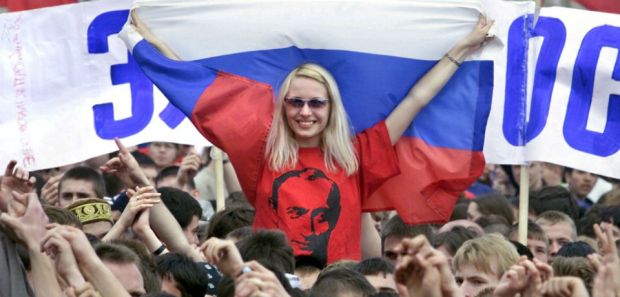
Get the hot deals while they last! Whatever’s on your holiday shopping list—buy now, it may never be this cheap again! In a single day this past week, the ruble exchange rate dropped from 59 to 80 to the dollar, further eroding confidence in the Russian economy and ensuring a deep recession next year—but also briefly turning Moscow into the shopping capital of the world.

Although this past week’s currency crisis marked the worst fall for the ruble since Russia defaulted on its debt in 1998, no one was waiting in bread lines or starting a run on the bank. Instead, anyone with any cash at all went on a buying spree. Long lines snaked through Ikea branches around Moscow into the early hours of Wednesday morning as people picked up furniture, bedding and other household goods at what had suddenly become bargain-basement prices. Crowds of eager buyers emptied shelves of computer monitors and snapped up flat-screen televisions at consumer electronics chains.

Read on at Politico

The Synthetic Drug Called Spice Is Ravaging Russia

spice

Standing by a bench near Pushkin Square in downtown Moscow, Ilya put a small chunk of a green substance into the end of a cigarette and lit up. What immediately followed was 15 minutes of disorientation and disembodiment, like getting dead drunk and losing control over your speech and movements.

This was “spice,” a smoking mixture made from spraying marijuana-mimicking designer drugs on innocuous herbs. Two years after the night that Ilya smoked it in a cigarette with friends near Pushkin Square, he died at the age of 35 from an overdose of vodka, heroin, and spice in the apartment he shared with his mother and brother. Ilya’s brother, who was smoking spice with him that night, is now in hospital for drug detoxification.

Read on at VICE News

Vlad Is Rad

h_99456916russiacrop

MOSCOW — Located in a redevelopment project in downtown Moscow, where one square meter of office space can cost up to $750 per year, Set’s headquarters resemble the office of an internet publication, or a tech startup. Well-dressed twenty-somethings work at large computers or lounge on beanbag chairs, checking their iPhones. A basketball hoop stands in one corner, with the upside-down face of Alexei Navalny, who was Russia’s leading opposition politician until he was confined to house arrest in February, pasted on the backboard.

The surroundings are decidedly 21st-century. But the group’s manifesto reads like that of a political movement from the last century, or even a religious sect.

Read on at Foreign Policy

Anatomy of a Bloodbath

h_51536968croptwo

It was a textbook ambush, fighters say, on volunteer militias who’d been practically abandoned by the Ukrainian army that was supposed to support them.

The late August massacre of volunteer troops leaving the strategic town of Ilovaisk through what they’d been promised was a “humanitarian corridor” was one of the bloodiest single episodes so far in the fighting in eastern Ukraine, leaving at least 100 dead. The conflict has now killed at least 2,600 people.

But in the days since, in interviews, volunteer fighters who escaped the bloodbath also described the battle as a turning point — one that revealed the lack of communication and trust between the three dozen volunteer battalions that have sprung up to assist Ukraine’s run-down military and the army leadership, which has been beset by complaints that it has treated the volunteers as cannon fodder.

Foreign Policy

Preparing for War With Ukraine’s Fascist Defenders of Freedom

452220858_azov_8-30

Blue and yellow Ukrainian flags fly over Mariupol’s burned-out city administration building and at military checkpoints around the city, but at a sport school near a huge metallurgical plant, another symbol is just as prominent: the wolfsangel (“wolf trap”) symbol that was widely used in the Third Reich and has been adopted by neo-Nazi groups.

The Azov Battalion — so named for the Sea of Azov on which this industrial city is located — is one of dozens of volunteer battalions fighting alongside pro-government forces in eastern Ukraine. After separatist troops and armor attacked from the nearby Russian border and took the neighboring town of Novoazovsk, this openly neo-Nazi unit has suddenly found itself defending the city against what Ukrainian President Petro Poroshenko called a Russian invasion.

Foreign Policy

Putin’s Next Move

452512000crop

When the Kremlin announced that Vladimir Putin would hold a special session of his Security Council on July 22 to discuss the “safeguarding of sovereignty and territorial integrity,” observers around the world wondered what ace the cagey Russian president might have up his sleeve this time.

Since Malaysia Airlines Flight 17 was fell from the skies over eastern Ukraine on July 17, Putin has faced increasingly angry calls to end his support for the rebels who are suspected of shooting down the plane. Would he take this opportunity to close the border with Ukraine and cut off the uprising from Russian volunteers and weapons? Or would he react defiantly, perhaps by starting a military operation in response to Ukrainian troops allegedly shelling Russian territory in recent weeks?

Foreign Policy